Smart Home Guides · 7 min read
How much does a smart home actually cost in India?
meshams · July 2026 · India
Ask any automation company what it'll cost and you get the same non-answer: "depends on your requirements, can we get your number?" We understand why — the price really does depend on your home. But that's no reason to leave you guessing until a salesperson is sitting on your sofa.
So here's the honest version, the one we'd give a friend who asked. Rough numbers, what pushes them around, and the bits that don't show up on the quote until it's too late to argue.
It comes down to switch points.
Nearly all of it hangs on one number: how many switch points you have. A switch point is one gang — a light, a fan, the geyser, a plug you actually want to run from your phone. Walk the house, count them. That count is most of your budget right there.
It's also why quotes are all over the place. A 1BHK with six points and a villa with twenty aren't the same job, even though both owners googled the same three words. The sensor, the purifier, a camera — those get added on afterwards. Get the switch count right first and everything else stops being a guess.
What it costs, by home size.
These are the ranges we'd actually quote for a switch-led setup on Lumos switches (they start at ₹2,499). It's switches plus fitting — the base every smart home sits on. Sensors and the purifier go on top, more on those in a minute.
| Home size | Typical scope | Switches, installed |
|---|---|---|
| 1 BHK | 4–6 switch points | ₹12,000 – ₹20,000 |
| 2 BHK | 7–10 switch points | ₹20,000 – ₹35,000 |
| 3 BHK | 10–14 switch points | ₹30,000 – ₹50,000 |
| 4 BHK / villa | 15–22 switch points | ₹50,000 – ₹85,000 |
Ranges assume a full retrofit across all rooms. Finish (Gold, Obsidian, Pearl, Silver) and module count per panel move the figure within each band.
Want to see where those points actually sit? We pulled a mid-sized flat apart room by room in the 3BHK smart home guide — living room, bedrooms, kitchen, what each one really needs.

Where the money goes.
Split the spend into what it's actually buying and it stops feeling like a black box.
The switches are the big one, and the part your hand lands on fifty times a day. That's exactly why we start here — you're upgrading something you already use, not adding a gadget that ends up in a drawer by March. Figure 70–80% of the total lives in this line.
Sensing is one Aura unit reading air quality, temperature, humidity, smoke and CO all at once. One or two per home does it — the living room, maybe a bedroom. This is the bit that turns your switches from fancy remotes into something that actually reacts to the room.
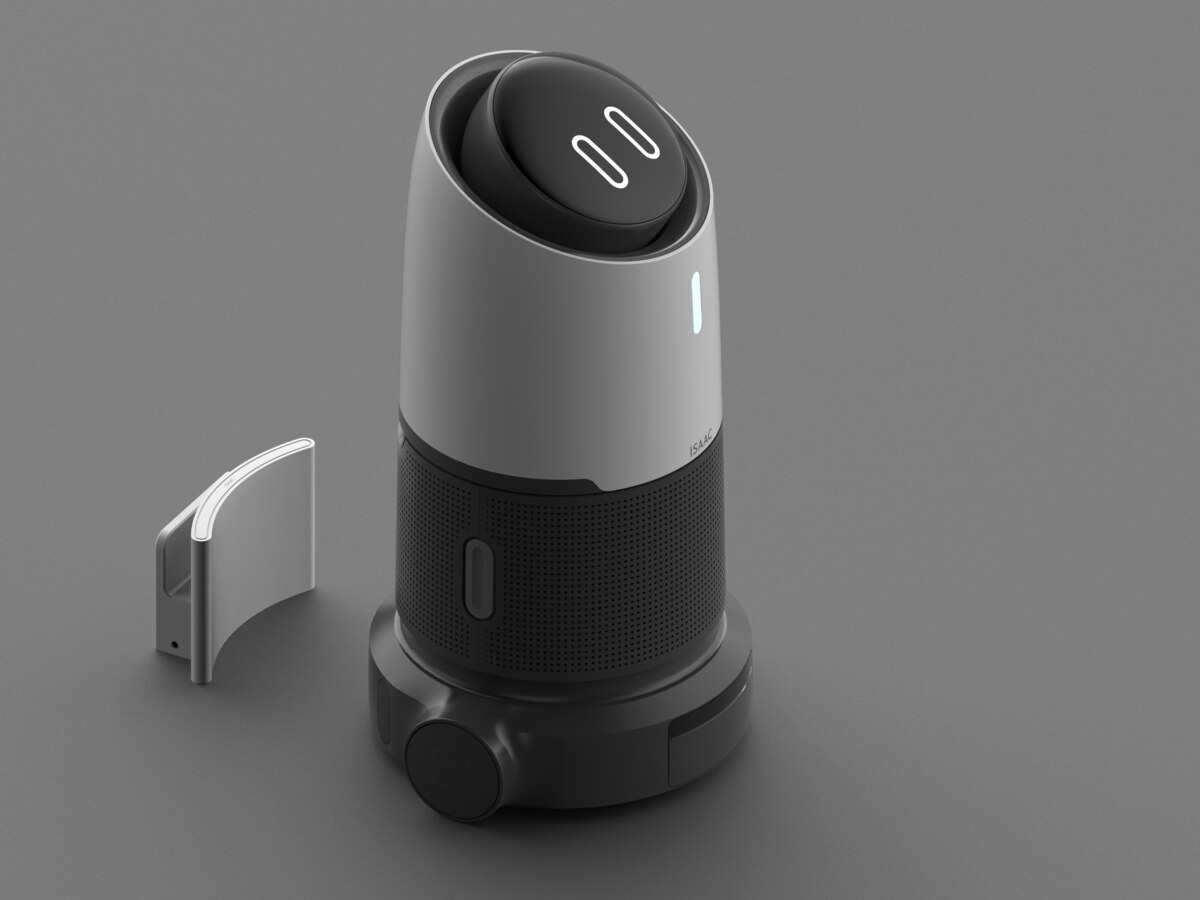
Clean air is the optional third piece — the Isaac purifier. In most Indian cities it pays for itself in one bad-air week. Adding an Aura and an Isaac to a 3BHK usually runs another ₹25,000–₹35,000 over the switch fit-out.
The cost nobody warns you about.
This is the one that wrecks budgets. Most imported smart switches need a neutral wire in the box. Most Indian homes — flats especially — simply don't have one. So the cheap switch you found online quietly becomes an electrician, chased walls, a plasterer and a paint touch-up, and that "saving" is long gone.
Lumos exists because of this exact headache. No neutral needed, and it fits the box your current switch already sits in. That's the whole reason we built it the way we did — the longer story is in why we built Lumos. What it means for your budget: no rewiring, no civil work, nobody living around dust for a fortnight. The number in the table is the number.
Budget or premium.
Two things nudge you up or down within a home size. Finish, first — the same panel in Obsidian or Gold just sits differently on a wall, and you pay a bit for that. Then how many modules hide behind each panel: a four-module panel running lights, a fan and a strip costs more than a single one, but it's replacing three old switches at once.
Our actual advice? Don't do the whole house on day one. Start where you spend time on purpose — living room, master bedroom — and add rooms when you feel like it. It's built to grow a panel at a time, so there's no penalty for going slow.
Getting your real number.
Ranges are fine for planning. For an actual figure, count your points — or let the System Configurator count for you. Pick the rooms, set the switches, choose a finish, and it prices the whole place in a few minutes. No login, no phone number, no call unless you ask for one.