Design & Product · 6 min read
Why we built Lumos — the switch that thinks.
meshams · May 2026
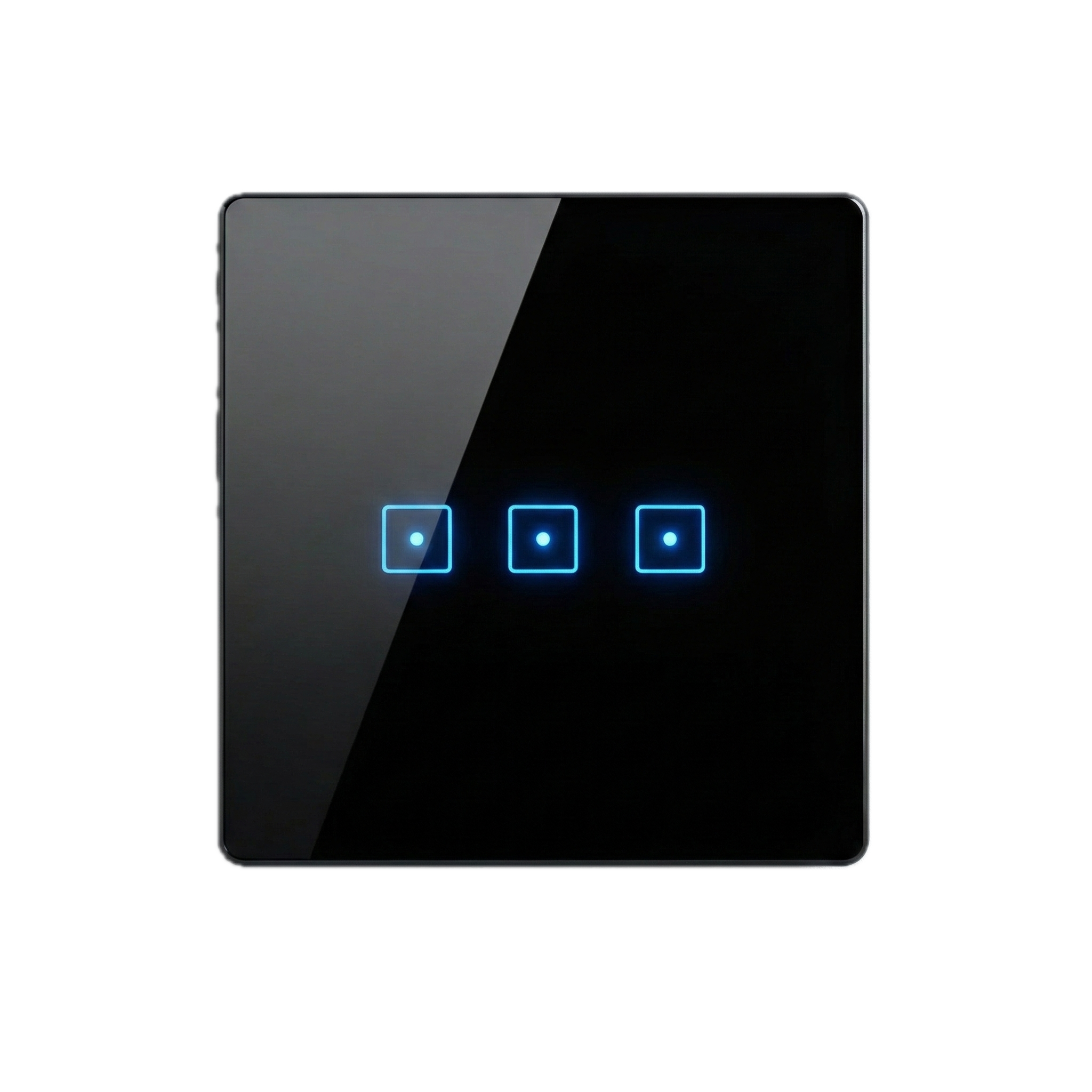
Every home in India has between twelve and twenty switches. Bedroom, bathroom, kitchen, corridor, balcony. Switches that have looked essentially the same since the 1970s. Switches you fumble for in the dark. Switches you leave on when you leave the house.
We started meshams asking one question: why is the most-touched interface in every Indian home still this dumb?
The existing alternatives weren't built for India.
We looked at what was available. International smart switches — from Lutron, Leviton, others — required neutral wires. Most Indian homes don't have neutral wires in the switch box. Importing and adapting them was expensive, installation required a specialist, and the aesthetic landed between industrial and clinical.
Indian alternatives were cheap for a reason. Flimsy plastic, poor connectivity, apps that stopped receiving updates after six months, and no path to integrating with Google Home or Alexa without workarounds.
Nobody had built a smart switch that was both genuinely capable and genuinely beautiful — and that worked inside the constraints of how Indian homes are actually wired.
Constraints shaped the design.
Lumos works without a neutral wire. This was a non-negotiable for us — neutral-required switches would have ruled out the majority of apartments in Delhi NCR, Mumbai, and Bangalore. Getting the electronics to function reliably on two-wire installations took significant engineering time, but it was the only way to build something that worked universally.
The panel is tempered crystalline glass. We chose glass because it doesn't yellow, doesn't crack under regular use, and communicates a tactile quality the moment you touch it. The capacitive surface responds to a deliberate press — not accidental brushes — and the haptic confirmation is subtle enough to feel natural without being theatrical.

Four finishes. One reason.
Indian interiors vary enormously. A Gurugram apartment finished in warm neutrals and teak has different needs from a South Delhi home with white walls and chrome fixtures. We launched Lumos in four finishes — Gold, Obsidian, Pearl, and Silver — because a switch that clashes with its room has already failed.
The finish isn't a cosmetic choice. It's part of how the product disappears into a room. The best version of Lumos is one the owner stops noticing — and just uses.
Intelligence that doesn't require attention.
Lumos connects to your home Wi-Fi and becomes immediately available in the meshams app, Google Home, and Alexa. Scenes and schedules work locally — they don't break if your internet goes out. Consumption data is logged per switch, visible in the app.
We resisted the temptation to add features for the sake of a spec sheet. No built-in speaker. No LED display with the time. No motion sensor baked into the bezel. Lumos does switches — and it does them completely.
What comes next.
Lumos is the foundation of the meshams home. Aura — our environment sensor, shipping October 2026 — pairs with Lumos to create scenes that respond to what's actually happening in the room. Temperature too high? Lumos adjusts the fan. AQI climbing? Isaac purifier activates. The switch stops being an input and becomes part of a loop.
That's where we're going. Not smart home as a collection of gadgets — smart home as a system that understands the room and responds, without you having to ask.